Interview: Jonathan Cipiti
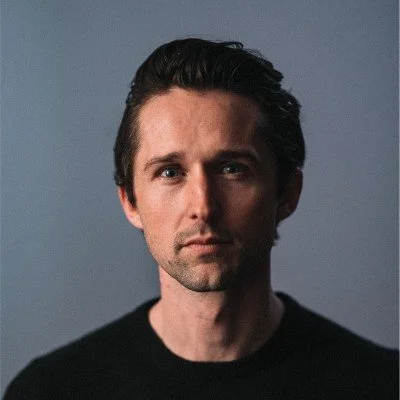
Jonathan Cipiti is an Emmy Award-winning documentary director who has worked with Windrider Studios for over a decade on several short and long documentaries, including Playing like a Girl: The House That Rob Built, which I was privileged to be a story editor on. (Edited for length and clarity.)
Listen and watch our unedited conversation on Youtube, Spotify, and Apple Podcasts
How did you get into documentaries?
It's a funny story. I never wanted to do documentary just because I didn't really know anything about it, so it was not on my list. I knew I wanted to get into film when I was younger, but I had a funny opportunity. I knew a few different people who worked in film and I got an opportunity to intern. There was this really cool film festival at the time, and so I was just getting my hands on whatever I could.
The short version is I got a call one day from someone and he's like, "Hey, I got your name from this other person I knew. I saw some of your work"—which I didn't have much at that time—"And my filmmaker dropped out. I'm going to Peru in two weeks. Can you go?"
And as you say, "Yes, yes, I will do that." It was really funny because he calls me the next day and he's like, "Hey, are you still good to go?" And I'm like, "Yeah, absolutely. I just need to see if I can get time off of class." And he's like, "What do you mean? How old are you?" And I was like, "Well, I'm 19." And he's like, "I thought you were 26."
But thankfully we went. It was a short documentary on women entrepreneurs in developing countries. We were outside of Lima, Peru in some really cool places, but also some super impoverished places. I had never been in a context like that. I remember we were in a small village where an 80-year-old woman was knitting an alpaca scarf, and I had my camera and I just remember thinking if this camera wasn't here, this story wouldn't be told.
From that moment, I'm so thankful for that opportunity. He and I work together to this day. He took a big chance on me and thankfully it worked out. It just really impacted me to see what happens when you're able to shine a light on true stories. It was really cool because at that time people were willing to take more risks in documentary in terms of as long as you were telling the story, people were open to different formats like super shorts or episodic or whatever it might be. I just got hooked, met some other people who were in that world, and I'm really thankful to be swept up in the doc world.
When you start a documentary, what's the first step for you?
I love the big picture. I love process, so I learned how to do everything. Somebody once told me, "If you want work, learn how to edit because everybody needs stuff edited." Learning how to edit really impacted the way I thought about story.
Now, what's been really cool is working in documentary. What's impacted me most is the proximity you have to people. As documentary filmmakers, we have a unique privilege where we get to be in and around people's lives in ways that most people don't. You get to sit and witness the normal things, but you're also spending two hours at a time talking to them about their life, change, and impact.
For me, anytime a documentary gets brought forward or we begin the process, a huge part is making sure I know the people and the story. Not just what we're going to tell, but is the story of the person, subject, or group something that I can tell? I get really excited about cool projects happening, but there are an infinite amount of projects that can be done.
One thing that has been really helpful is realizing you're not supposed to tell every story. So the first part for me is always: who's the team around it? What is the story about? Even if I get it and I like it, am I the person to tell it? Then from that point, it just becomes a lot of research and a lot of relationship.
We've done certain projects that were brought forward and I started down that road and realized, "This is an awesome project, but I actually think I might know a different filmmaker who might be better to tell this story." That is always really difficult because you want to do it. But when you're stepping into somebody's life and story, that's a long, heavy commitment. If it's not a perfect fit, you might not be doing justice to the story or the impact that you're telling.
What are you looking for when deciding whether this is the right story for you or if you're the right director for it?
Part of it is gut, and another part is in getting to know the people who the story is about, but also the producing partners. It becomes apparent what the expectations and style are. In documentary, there are so many different kinds of styles and approaches. Over the years you start to develop a sense of how you like telling stories, the amount of characters involved, and all of that.
Usually, there is some level of alignment, especially since many of the projects I've been a part of are highly relational, involving people who have seen my work or worked with me in the past. Other times it's more like, "Hey, there's this story of impact and we really want to tell it and it needs to be done in six months," while there are three other projects going on. A lot of times the "nos" are basic logistics. But what's cool with the creative community is when you know other people, it's easier to hand it off. Even if I'm not the one doing it, I want to champion it and be a fan of good work being done.
This interview is part of The Radio Edit, a newsletter for documentary filmmakers.
Get it straight to your inbox by subscribing!
When you're going in to direct something, how do the different skill sets from your career play together and impact your role as a director?
In a lot of ways, the first opportunity I got to direct took me by surprise in how much I enjoyed it. Especially in documentary because while there is big-picture story planning, I really loved the on-the-ground side of directing—how intimate you are life-on-life with the people you're with.
I also grew to love the interview process, realizing from the editing side that so many docs are made or broken in the interview. Everything became integrated: the way we're thinking about the edit, the cinematography, planning, and composition. It made me realize that even if you can edit and shoot, in the past you did it all out of necessity.
But then realizing how much better other people are than me at editing and cinematography opened up my world to the beauty of the collaborative side of documentary. Coming from the side of editing and shooting has definitely informed the front end because I love the tech and knowing what tools can help us do things better. It helps in the planning process to know all the options.
Bringing in people who are much better than I am at those specific roles gives me the rudimentary language to speak to it. I was joking with a composer I've worked with on nine projects now, Grant Fonda. Music is one of the few areas I haven't touched in film. When we were working on our first project, I had no language to express it and would ask, "Can we just make it a little more plucky?" I love learning the pieces of language you can have to work with other craftspeople to get something better than you could drum up on your own.
How do you tackle a topic when you don't have a history or knowledge of it, like say basketball in The House that Rob Built.
That's actually a generous description. I not only didn't play basketball, I don't watch basketball. I'm mildly interested in it, but I think it actually helped in a lot of ways. With any story, I really love the learning process because I truly believe everybody has a story worth telling, and oftentimes people just aren't asked.
Not having a basketball background helped that film in particular because I had to do research as someone who would like basketball. It also helped me ask: why would someone like me care about this story? It's funny that it's one of five basketball projects I've worked on and each time people ask if I played. I tell them, "First of all, look at me. Second of all, no."
But it's helped identify the human components that would draw someone in, paired with the idea that those who do know and care about basketball need to enjoy it as well. My approach is spending enough time with the subjects to know what drives them and what beauty they see in basketball.
All of the documentaries I work on are in the impact space. I'd be a lot less interested in making a documentary about basketball if that was all it was about. For that film in particular, it was about a coach and a team and the beauty of coming together. That is such an easy metaphor for all of us. Even if we've never played sports, what does it look like to pour into one another's lives? What does it look like to belong to something? That allowed it to spill over so that even if someone has no context of sports, we all have the desire to know and be known.
One thing I always like to approach docs with is to do as much research and become as much of an expert as you can, but then when you go in to capture it, approach it like an absolute novice. That helped a lot in the interviews—learning as much as I could, but then going in and saying, "Teach me about this as though I know nothing about it." Ideally, the viewer feels welcomed into a world they might not feel they fit in. It's a delicate balance.
People get a little up in arms when I say this, but I think in documentary, the information is only 10% of the puzzle. That information needs to be rock solid—you can't get your facts wrong—but the other 90% is the human component. I've seen docs that are all human and no information, where you feel it's nice but not necessarily true. Then you have some that are just all information.
I really think the reason why we watch anything is the idea of human connection. I was talking to someone about that in the impact space regarding a nonprofit piece they were making. It's important to talk about numbers and how much good an organization is doing, but if you don't see the people whose lives are being changed, it's easy to keep those ideas as numbers and not see the people behind it.
What's a curveball that comes to mind in a film you've worked on, and how did you respond to and overcome it?
There are several. I feel like that's the disclaimer in documentary; you can plan a little bit and then there's always going to be a wrench thrown into it. A big one recently is another basketball project called In The Paint. It's the story of a coach who started a club team in Inner City Syracuse for kids from really tricky backgrounds.
Two of the kids' dads have been in and out of jail. One of the kids' dads overdosed and passed away during the course of our filming. One of the kids' dads was an assistant coach, went missing, and then showed up in rehab three months later. Unlike a lot of projects we've done in the past, this was a story of a team happening right now. It's a series of six episodes filmed over two and a half years.
Our theme was what happens when you have a radical presence in people's lives. We all need community and mentorship. Over the course of some of those tragedies, we were filming and had to have calls with the kids to ask, "Hey, are you comfortable if we use this?" I get so swept up in the big picture and the impact it might have on others' lives, but I'm thankful to have a good team around me to parse through that.
The end product is one thing, but if you're not honoring the people you're filming with at that time, it really doesn't matter. There was an interview we got with one of the kids going through something rough. From a story point of view, it was objectively great, but we talked about it and decided it wasn't honoring to the story, the kid, or his situation. It worked out fine, but it's easy to get blinded by the finished product. We spent hundreds of hours with that team, and to say those six 30-minute episodes are more important than the lives that were lived can be a temptation or a danger. Every time there's been a wrench like that, we've never regretted not using the footage. They are definitely hard decisions in the moment.
You recently debuted a film, Broken Mary. What led to the choice of doing a theatrical premiere for that film? How do you approach distribution?
It's a big question. It's encouraging to me that people will watch completely different formats of documentary, whether it's a micro-doc, a short, episodic, or a feature. Broken Mary started almost six years ago as a feature. It's about beauty from brokenness and the life of a guy named Kevin Matthews. Most stories I do follow that theme: we're all broken, but there can be beauty.
The producing partners on this project—ODB Films, Family Theater Productions, and our company, Windrider—all teamed up. The goal was just to get the story made. We didn't set out to do a Fathom event or theaters specifically, but as we went through the process, we realized there are a lot of places for this to exist. When we landed on a feature, we used our past experience with Fathom events. They've changed recently, but it's a cool way to fuel a bigger marketing campaign.
We did a one-night release in a thousand theaters. It's a great way to leverage built-in groups to get people out. But there needs to be a next step. Producers might have a different answer, but as a director, I feel it's less about the amount of people and more about the right people seeing it. Fathom made sense to create awareness and then point them to where the film will be next.
We make films, but we also curate them. We show films and then facilitate the conversation that comes out of them. We have our own platform where these groups and universities can take all that content for free. Rather than everybody coming to our space, we plug into the people already doing the good work.
In documentary, you want to sell a film to as many people as possible, but it's been really cool to plug into groups that want to go deeper. Even if it's fewer eyeballs, there seems to be a bigger engagement. 70% of the content on our platform is stuff we license from other filmmakers who want the same thing—they might have a short that won an Oscar, but they want it to go into these groups to spark talk.
Most documentaries bring awareness to a topic, and while not every documentary has to have an activist outreach, how can that awareness spark further conversation?
We did a powerful project three years ago in India about a group that turned an old brothel into a school for children living in the district. They are now becoming doctors and lawyers. What was powerful for me was that after I left India and went home, I was thinking about India less but thinking about my neighbors more.
Documentary raises awareness about things you might not know, but it also gives you the ability to see the world you're living in with fresh eyes. There are many things to be pessimistic about, but when you tell stories of people changing the world, it's hard to stay pessimistic because you're confronted with the light of those bringing it into the darkness.
My hope is not that everybody needs to be part of every movement, but that it gives you the ability to no longer say you don't know. If you can give people a seat at the table, it's not about hearing my perspective as a filmmaker—I just want to shine a light on this. What's your perspective? Let's talk about it.
What do you have coming up next and where can people see your films?
Jonathan Cipiti: We are finishing out two other projects right now. Broken Mary was out last night. We're finishing the last two episodes of that basketball series I mentioned, and we're contemplating a Fathom event for that this spring. Then we're doing another project in India in February about a pastor in the slums of Mumbai. All of these can be seen in different places, but many live on our platform, Windrider Studios, and it's free.
Looking for editing help with your documentary? Let’s chat.